

The natural environment shapes how we live, work, and plan for our future, and climate impacts can touch nearly every facet of our lives. Severe weather events, such as extreme heat, affect cities and businesses and exacerbate disasters like wildfires. In fact, Canada faced record-breaking fires in 2023 and last year’s Los Angeles fires ranked as the second and third most destructive fires in California history.
This piece examines nature-based community recovery and household adaptation investments that can support future resilience in Los Angeles and other communities.
Restoring community spaces
Shared, communal spaces are central to the fabric of our communities and neighborhoods. As part of disaster response, after immediate needs are met, communities often turn to restoring shared spaces and resources. The Altadena Community Garden is a longstanding community institution with over 50 years of history that serves as a space to grow food and come together. In January 2025, the Eaton Fire caused widespread devastation across the Altadena community, including the Garden. As part of its support for the region’s recovery, BMO provided grant funding to the Altadena Community Garden through its Wildfire Recovery Fund to support community programs and infrastructure upgrades, including soil remediation, fire-resilient improvements, and restoration of shared tools. Joe Nagy, President, and Mary McGilvray, Vice President, of the Altadena Community Garden recently shared their firsthand experiences and insights about their work following the fire.
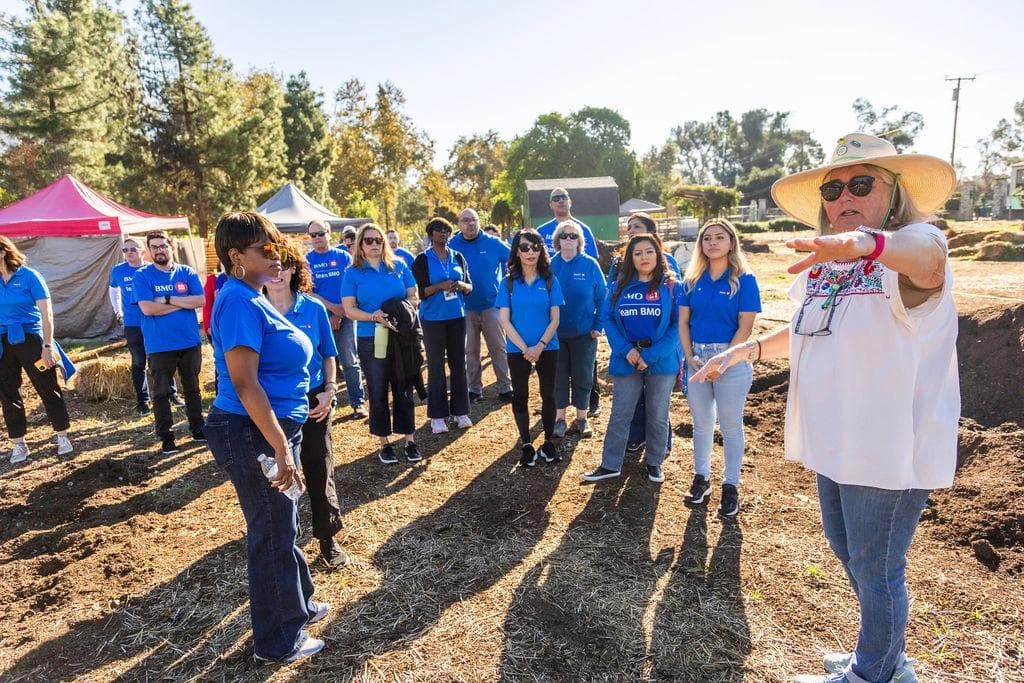
Joe and Mary described the shared traumatic experience for the Garden members and surrounding Altadena community. They felt an urgency to figure out how to restore and reopen the Garden, a beloved local resource. While ash from the fires was still in the air, the team saw an opportunity to reimagine and rebuild the community resource with an increased focus on sustainability, regeneration, and education.
Given the concern about site safety and soil contamination (toxins, heavy metals, etc.), access to the Garden was restricted. Once the Environmental Protection Agency (EPA) and U.S. Army Corps of Engineers removed toxic debris and the county regraded the site, the Garden team started to rebuild and re-envision the space from the ground up.
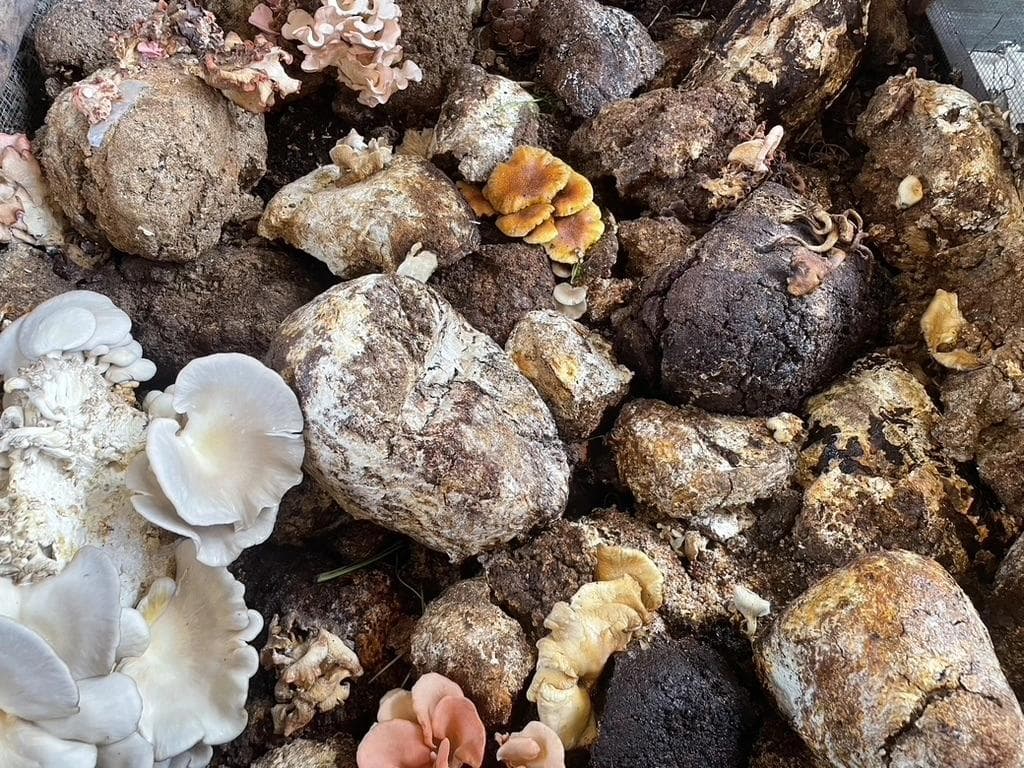
The Altadena Community Garden team took early soil samples to establish a baseline understanding of contamination and initial results confirmed elevated contamination levels, especially closest to burned residential structures. With soil information in hand, they set out on their recovery efforts. The team was familiar with phytoremediation (remediation through plants), a well-documented practice. It was suggested that the Garden also try to implement mycoremediation or remediation through fungi (mushrooms), which has been used after other environmental disasters, such as oil spills. Both remediation methods rely on the unique ability of specific plants and fungi to remove toxins, contaminants, and even microplastics from soil.
As an emerging practice, there is a limited body of research on mycoremediation in post-fire recovery. To fill this gap, the Garden team tapped their local network of research partners, local growers, soil experts, and volunteers. They developed the strategy and infrastructure to heal the soil by using plants and fungi to break down toxins and contaminants over time.
Over the course of more than seven months and with help from close to 100 local volunteers, the Garden leveraged nature-based solutions to heal and remediate their soil. After agencies removed the burned debris, the team:

Dug a hugelkultur trench and filled it with diverse organic materials such as logs, biochar, mycelium, and straw,
Planted repurposed mushroom blocks from local commercial growers to spur fungi growth,
Brought in almost 600 cubic yards of compost,
Leveraged locally felled, 100-year-old Deodar Cedars for garden plot boards, and
Conducted regular soil testing with the help of partners such as Soil Wise and CSU Channel Islands to document the process.
In less than a year, Joe and Mary saw mushrooms sprouting (and cleaning the soil), butterflies flying through the garden, and plants growing again. The test results echoed the rebirth they saw at the Garden—the majority of the soil met EPA standards for safely growing food.
The Garden is working hard to open as soon as possible and will continue to serve as a hub for the community. Beyond their impact in Altadena, the team is contributing to wider learning and research on soil remediation, building the body of knowledge around this recovery solution. They will continue to share insights from their soil sampling and recovery approach to inform broader efforts. The team hopes these learnings can help others to remediate soil—and support recovery—in other impacted community and residential areas.
“What stands out in Altadena is the determination of the community to not just rebuild, but to rethink what resilience can look like. Our role is to support local leadership by investing in recovery efforts that strengthen shared spaces and create lasting benefits for the community and beyond,” shared Helen Seibel, Head of Employee and Community Giving at BMO.
Home hardening and building for the future
At the community level, rebuilding and reimagining shared spaces are critical steps in recovering after disaster. For individuals and families, nothing compares to ensuring a safe, healthy, and resilient home environment. Research has informed best practices for landscaping, construction, and maintenance that can support long-term resilience and reduce risk for not only individual homes, but for neighborhoods too.
For example, in an interview with Dr. Kimiko Barrett, Wildfires Researcher and Policy Analyst with Headwaters Economics, she shared that ember-driven and home-to-home fire spread in a neighborhood account for about 90% of home loss during a wildfire. Her work emphasizes how individual households can contribute to collective resilience in the face of climate risk. There are a range of retrofits and practices that community members, including renters, can adopt to reduce wildfire risk. Examples include:
solar panels and battery storage to lower energy bills and retain power in the case of emergencies
home hardening, which is a building method and set of maintenance practices to help protect against wildfire.
CalFire has resources and guidance to support home hardening practices such as:
building with fire-resistant and non-combustible building materials (metal, stucco, etc.)
hardscaping to prevent the spread of fire (using gravel or pavers around building perimeter)
ensuring access to water hoses that are long enough to reach different areas of your building
maintaining at least a 5-foot combustible-free zone around your home.
Renters can take action to improve safety and resilience without making structural changes to buildings. Removing debris and flammable materials (such as brush, stored firewood, and other organic materials) around a building, entryway, and deck can reduce risk.
Financing and integrating recovery efforts
Recovering from disaster or making upgrades to increase resilience at home can require significant investment. Many homeowners in Los Angeles discovered the level to which their homes were underinsured only after the fires or during the recovery process, highlighting the need for additional financing to support rebuilding and recovery.
Research from Pepperdine University and Beacon Economics shows that rebuilding rates after major California wildfires have varied widely. For example, “approximately 76 percent of homes lost in the Tubbs Fire were rebuilt within six years,” compared to fewer than “30 percent of homes rebuilt within five years” of the Camp Fire. Homeowners must navigate local permitting requirements, insurance payouts, financial considerations and other variables to rebuild—if they choose to do so, according to research by Climate Resolve.
Given the insurance landscape in California, increased local fireproofing requirements, and desire to improve home and neighborhood safety, some are opting for building features that improve energy-efficiency, provide backup power, and protect against a range of climate risks.
For those with the opportunity to undertake construction, the process allows for an integrated approach to building a more resilient home—with materials selection, energy systems, and site design. Through work across the Los Angeles region, BMO has seen clients finance and approach home resilience through tools such as a One Close mortgage, which provides financing for both the construction and permanent phases of the homebuilding process. Examples of resilient features incorporated into a home’s design include:
Energy-efficient upgrades to appliances
Solar and battery storage
Heat pumps and building electrification
Geothermal heating and cooling systems
Hardscaping around the home
Sprinkler system to fend off embers and flames
Stormwater management
In addition to One Close loans for home construction, current homeowners looking to retrofit or add features may use a home equity product, such as a line of credit (HELOC) to finance resilience-related upgrades. HELOCs are a commonly used financing tool to support home upgrades, including energy-efficient and resilient-focused improvements.
It is important to check for local, state, provincial, or federal incentives that may support rebuilding, home purchases, or certain home features. For example, in California, renters and homeowners may be eligible for incentives for zero‑emission vehicles, home energy upgrades, and water‑saving improvements (such as turf replacement). Additionally, programs across Canada offer grants, rebates, and tax incentives to help homeowners make energy-efficient upgrades more affordable.
Halé Behzadi, Vice Chair, California for BMO U.S. recently reflected: “As a long-time Angeleno, I understand firsthand the profound impact these fires have had on our communities. I’m encouraged by how local businesses and residents are coming together not only to rebuild, but to do so with a focus on a more sustainable future.”
Looking to the future
The devastating LA fires tore through communities last year and caused unthinkable damage and collective loss. In the face of crisis, communities responded to the disaster with remarkable grit and determination. Community members and leaders continue to reframe disaster response as a reimagining of a more resilient city. Last year, in an interview with Matt Petersen, President and CEO of the Los Angeles Cleantech Incubator—a recipient of BMO’s Wildfire Recovery Fund—he shared his call to “rebuild [Los Angeles] better and more resiliently from the get-go.”
That work is ongoing, and the examples shared in this piece highlight how communities are rebuilding with an eye to the future. The lessons from these efforts are relevant to communities beyond Los Angeles, including those impacted by wildfire and other climate‑related disasters.