

The world is racing to secure critical minerals for everything from defence to robotics. Canada has abundant natural resources to address this demand but a significant amount of processing happens overseas.
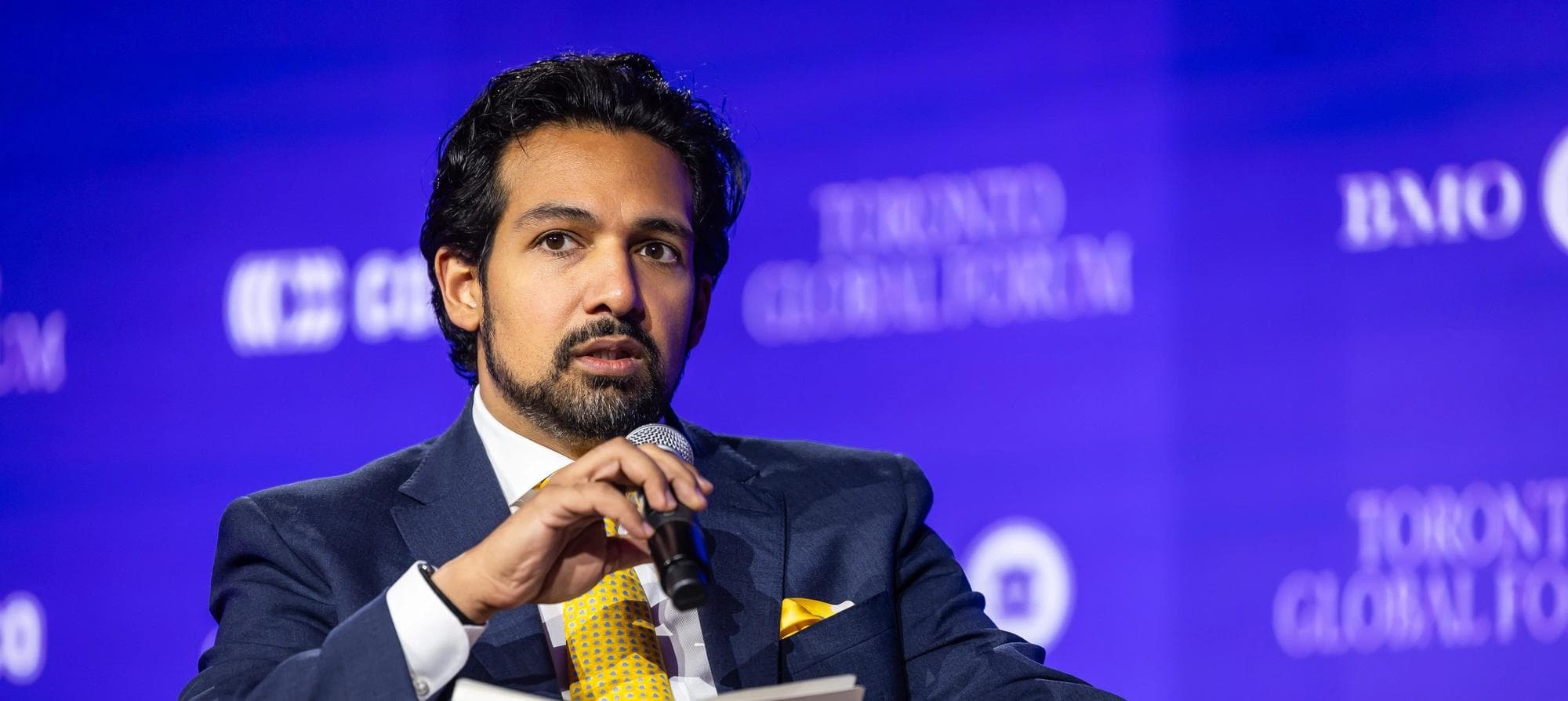
Critical minerals supply chains and finding ways to retain their economic benefits in Canada were focal points of a panel titled “Critical Minerals and Industrial Sovereignty” at the 20th annual Toronto Global Forum, organized by the International Economic Forum of the Americas (IEFA). The panel, moderated by Rahim Bapoo, Managing Director and Head, Critical Minerals, BMO Capital Markets, featured:

Mark Selby, CEO, Canada Nickel Company
Colton LeBlanc, Minister of Growth, Development and Defence Industries, and Minister of Acadian Affairs and Francophonie, Government of Nova Scotia
Alden Greenhouse, CEO of Avenir Minerals and Vice President, Critical & Strategic Minerals, Agnico Eagle
Listen to a Markets Plus episode based on insights from this panel discussion:
The conversation explored the processing capacity Canada has lost, the advantages that remain and the people and financing needed to move the industry forward. Here are the highlights:
What Canada gave up
According to Mark Selby, any plan for the industry’s future has to account for the sale of Inco, Falconbridge and Noranda to foreign buyers in the mid-2000s. Beyond the loss of domestic ownership, Selby said Canada also lost a significant share of domestic processing capacity as production shifted outside the country.
“Capital allocation decisions are being made outside Canada today,” he said. “We need to build new Canadian champions.”
Alden Greenhouse said the country needs to be pragmatic about rebuilding processing capacity. In his view, sovereignty must reach beyond Canada’s borders to include its allies due to varying challenges. Tonnes of nickel concentrate are far harder to move than bars of gold, for example.
Selby cautioned whenever a stage of production moves abroad, it takes its value with it whereas security benefit is generated from keeping more production in the country. Since Canada relies on imported specialty alloys, a supply cutoff could shut down important industries.
With regard to bringing in external business, Selby would like to see Canadian mining companies jointly pitch Korean and Japanese battery makers and European steel makers on the benefits of locating plants here, with several mines able to supply them. “We should be working in a coordinated fashion in Canada,” he said.
Rebuilding the processing base
Colton LeBlanc said Nova Scotia is working with the industry to make the approval process more efficient while maintaining strong environmental protections. In the past year, the province doubled its exploration licenses, a significant number for a region with less than 3% of Canada’s population. Beyond that, he sees opportunities in processing, manufacturing and research that could support battery development and defence.
Rahim Bapoo asked the panel about the economics of increasing Canada’s processing capacity, wondering whether better technology could bring down processing costs. Selby pointed to the Timmins Nickel District as an example of how the right resource in the right place can make processing viable.
The deposits in the area are estimated to have enough nickel to support production for more than 100 years, Selby said. In addition, the infrastructure to develop the resource is already in place, with access to energy and transportation. He said his team will use proven technology to serve customer needs it understands, without counting on higher prices. “We can build because of the unique set of infrastructure and capacity in Northeast Ontario,” he said. “We can be competitive in today’s market.”
For smaller regions, LeBlanc said a processor could be the anchor tenant that draws other businesses, much as a major store attracts smaller shops. With Nova Scotia’s deepwater ports and direct market access, he sees room for the province to compete for that kind of investment. “We’re not big, but we have big opportunities,” he said.
A future worth investing in
For these projects to succeed, Greenhouse said, the industry needs the support of the communities around them, something it has worked hard to earn. “Real reconciliation with First Nations only happens with real economic participation, not token economic participation,” said Selby.
In addition to hiring locally, Greenhouse said the industry needs to help skilled workers and their families relocate to mining communities. At Agnico Eagle, moving five drillers and their families from Mexico took additional relocation staff.
“That is really where I think governments can help us, with policies that encourage and support people moving into our sector,” he said. “Unfortunately, the mines aren’t in Toronto and Vancouver and Montreal.”
That need for government support extends to financing, Selby said, since private investors tend to stick with the metals they understand. Selby said that in 2024 and 2025, most of the developer-stage mining capital was directed toward copper, gold and silver projects.
For minerals such as cesium and tantalum, he encouraged governments to invest early. “If we start the ball rolling, in 10 or 15 years, I think we could have a very exciting economy,” he said.