

Businesses once focused on finding efficiencies and building integrated supply chains. Now, leaders must make long-term investment decisions in an environment where assumptions can rapidly change. Geopolitical tensions, higher rates and advances in artificial intelligence are influencing how companies invest, operate and remain competitive.
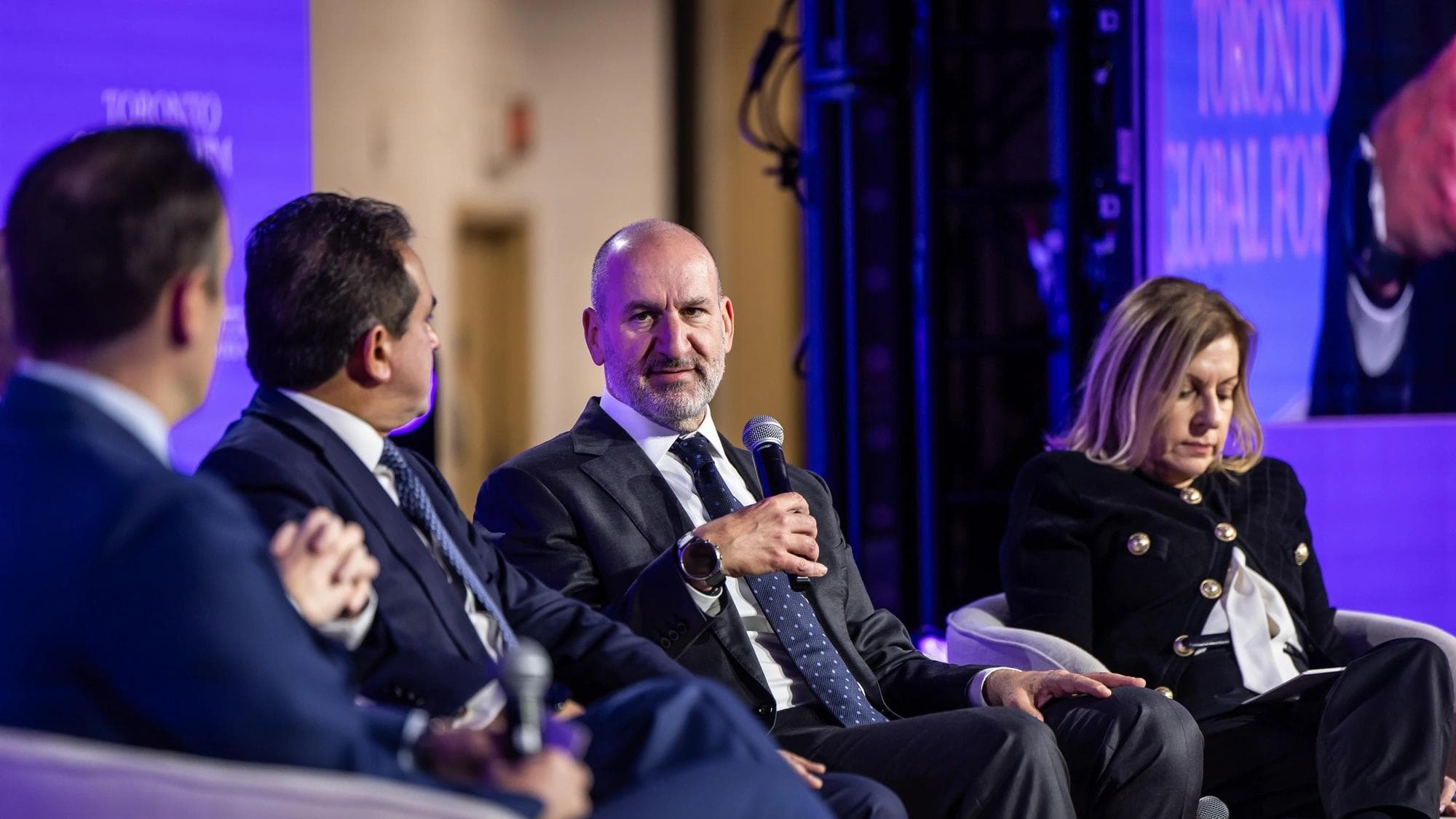
“The New Rules of the Global Economy”, a panel at the 20th annual Toronto Global Forum, organized by the International Economic Forum of the Americas, focused on how businesses and investors can navigate these changes.
Moderated by BNN Bloomberg contributor and Ticker Take host Jon Erlichman, the discussion featured:

Alan Tannenbaum, CEO and Group Head, BMO Capital Markets
Daniel Gamba, Co-President and Chief Commercial Officer, Franklin Templeton
Antoine Flamarion, Co-Founder and Co-CEO, Tikehau Capital
Sherri Rossoff, Managing Director, Chief Operating Officer and General Counsel, RockCreek
Listen to a Markets Plus podcast based on insights from the conversation:
Here are the highlights from the discussion:
Preparing for different outcomes
Because of geopolitical realignment, rapid AI innovation and the growing convergence of public and private markets, business strategies must now constantly adapt. For BMO’s Alan Tannenbaum, the accelerating pace of change means leaders have to consider immediate disruptions in addition to the longer-term trends shaping their industries.
“The need to be able to think short, medium and long term simultaneously, and plan through that cycle has become increasingly critical,” he said.
For instance, short-term market uncertainty can affect financing and transaction decisions even when the longer-term outlook remains positive. The challenge is to prepare for a range of conditions so businesses can move forward as circumstances evolve. “Change is the new reality; change is the constant,” Tannenbaum said. “That’s the world we now live in.”
He explained that with the cost of capital influencing borrowing as well as M&A, business discussions should include what might happen if markets take an unexpected path.
“How can we help you prepare for different outcomes?" he said. “How can we think through the range of possible outcomes?”
Looking at the AI opportunity
Advances in AI continue to drive significant changes in the global economy. Tannenbaum is optimistic that investment in infrastructure to support the rapid growth of AI could support broader business adoption of corresponding solutions. Likewise, with the infrastructure buildout today, you’ll find businesses with different risk profiles. For instance, engineering and construction companies building data centers, energy companies supplying power and developers building AI models all participate in the same broad trend, but they have different exposures.
For banks and investors, it’s essential to have discipline in selecting partners and managing risk. Tannenbaum said many companies are increasingly focused on how to deploy AI within their businesses to drive growth and expand margins.
“Every company is deploying these tools and using this technology in a way that ultimately will drive usage for all of the infrastructure that's being put in place,” Tannenbaum said.
Gamba agreed that how companies use AI is a significant opportunity. He highlighted uses in biotechnology, pharmaceuticals, aerospace and other industries, while emphasizing that investors need to look closely at whether companies are changing how they operate and serve customers. The next winners, he said, will be companies that “start to apply technology to deliver real benefits”.
Building resilience and finding opportunities
In addition to technological advances, geopolitical uncertainty is now an important factor affecting business and investment decisions, Tannenbaum said. Years ago, it would have been hard to anticipate Russia’s invasion of Ukraine, U.S.-Canada trade tensions and the prolonged conflict in the Middle East. Yet these geopolitical circumstances have forced companies to adapt faster.
“The period of adjustment has shrunk dramatically,” he said. “Markets adjust. Pricing adjusts. Return expectations adjust.”
Canada offers a concrete example of how to move forward. Tannenbaum pointed to renewed optimism regarding investment in Canada, with opportunities to invest in key infrastructure and energy, and added that many BMO clients are well positioned to benefit from that activity.
“We’re seeing clients that are going to thrive as a result of that,” he said.