

More companies are adopting AI tools to help employees do more meaningful work in new ways.
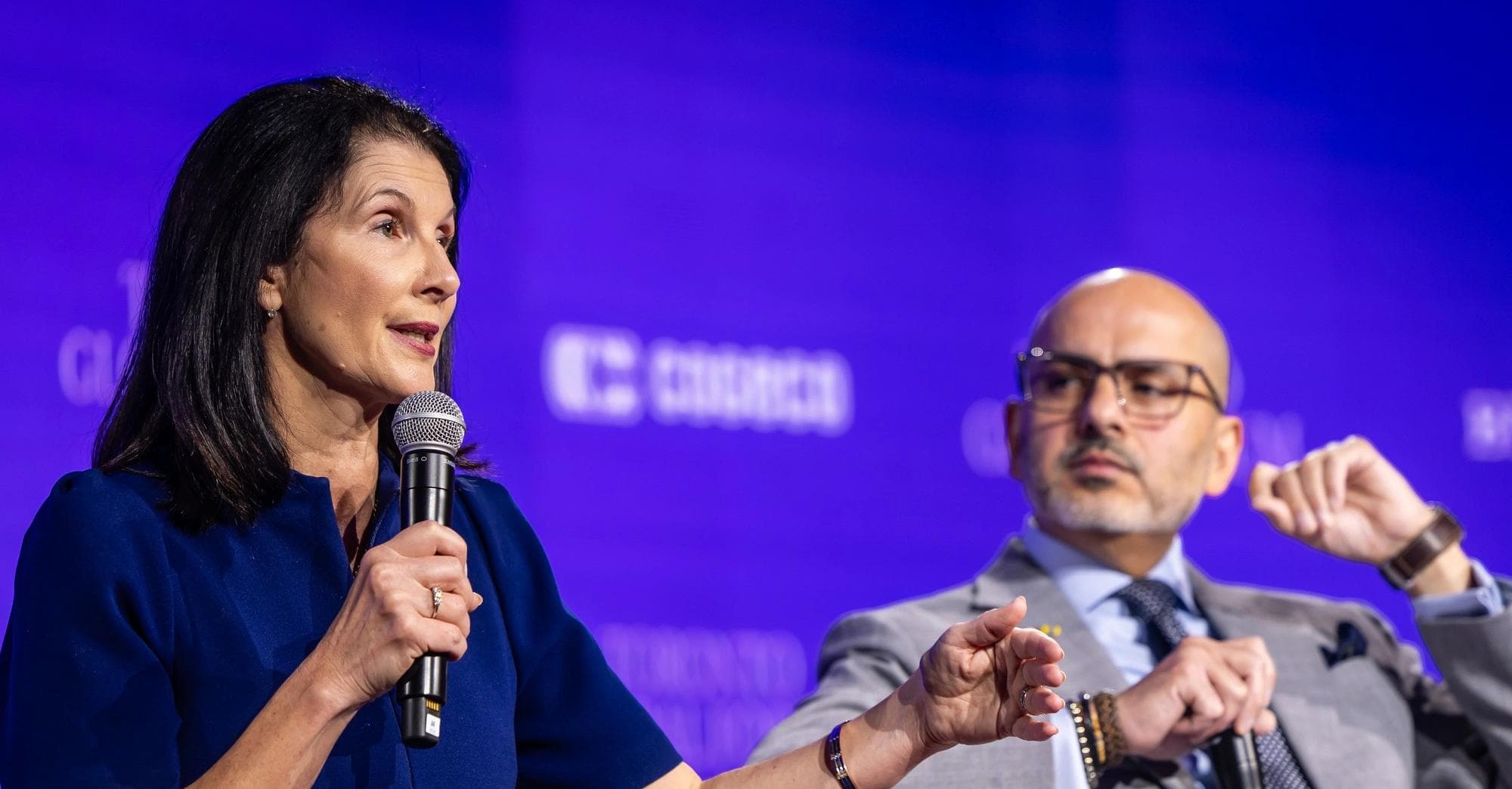
That was the core message of the “Unlocking the AI Dividend” panel at the 20th annual Toronto Global Forum, organized by the International Economic Forum of the Americas (IEFA). The conversation featured:

Mona Malone, Chief Administrative Officer, Chief Human Resources Officer and Head of People, Culture & Brand, BMO Financial Group
Andrej Zdravkovic, Senior Vice President, GPU Technologies, and Engineering Software and Chief Software Officer, Advanced Micro Devices (AMD)
Dave Chopra, Executive Vice President and Country Head, HCLTech Canada
Nimod Narayanan, Chief Technology Officer, Rakuten Kobo
Ann Marie Vaughan, President and CEO, Humber Polytechnic (Moderator).
Listen to a Markets Plus episode based on insights from this conversation:
Accountability and trust
As more companies integrate AI into their workflows, the question business leaders need to focus on is not whether they can do something with AI, but whether they should, Mona Malone said. That’s because, as powerful as these technologies can be, organizations may not always see the potential risks of automating certain tasks.
While BMO is leveraging AI, Malone says the bank is taking a measured approach that carefully considers how it could affect customer experience and whether it could erode their trust.
For Dave Chopra, one challenge is determining who is responsible for a mistake. Is it the person who entered the prompt or the engineer who wrote the code? Chopra argued that from the regulator’s perspective, accountability could be the designer’s problem, not the one who executes.
Malone agreed. “Really sweating those decisions is part of that work design element that I think is critically important,” she said.
Keeping humans in the loop is critical, added Andrej Zdravkovic. For any AI system that’s making decisions on behalf of an organization, there needs to be some way to go back and verify the output. “The most responsible position for engineers right now is to review these outputs of AI before they reach production, before they start serving the public,” he said.
Malone added that risk professionals, alongside business and technology leaders, must develop control and governance systems to embed them from the outset. “It’s about ensuring that you’re thinking about business value, risk, and trust together as you’re designing these new business systems.”
Using AI to enhance, not replace
For Nimod Narayanan, the payoff from AI isn’t about being able to do the same work faster but about doing things differently and doing them better. For example, Rakuten Kobo’s finance team is using AI to produce monthly insights.
Andrej Zdravkovic sees the same thing happening at AMD, where AI is expanding what its people can do. “The work is shifting from something that is automatic, even boring for the engineer, to something that’s actually very interesting to design.”
For customers, Malone said the bank sees AI as a way to personalize offers to drive customer value. It also enables employees to work better, smarter and more effectively. Internally, the bank has introduced an agent that provides branch employees with product knowledge, policies and procedures. It has reduced calls required to internal support teams, she said. “There are thousands of opportunities like that across the organization.”
Impact on the next generation
One theme that came across from all the panelists was that AI's value is ultimately tied to its ability to create new opportunities for people. In Chopra’s eyes, if AI replaces all entry-level work, it could make it more challenging to find skilled and experienced employees to fill key roles down the road.
Malone picked up on this same idea, noting that it’s important for companies to foster a culture of continuous learning, and be willing to create opportunities for the next generation. BMO hires around 1,000 young people across North America every year, and she doesn’t see that changing, she explained. “We see that as a critical part of the value that we bring,” she said.
BMO has a responsibility to think about people’s future development, she said, and businesses need a pipeline for future leaders. “Ten years from now, who are your technology leaders? Your head of retail banking, your head of commercial banking, and how are you building those career paths for them?” she said. “That’s being taken into consideration as we’re redesigning value chains across the organization.”