

Healthy soils are a cornerstone of effective farm management. Practices that build organic matter in soil, improve its structure, and help it retain moisture support efforts by farmers to stabilize yields, manage input costs, and maintain consistent crop quality over time. These same practices are also proving to be a practical way to strengthen supply chains against climate variability—linking agronomic performance, economic resilience, and environmental outcomes in a single management approach.
By 2040, many of the world’s agricultural regions are projected to face high exposure to at least one major climate hazard. In the U.S. alone, wildfires could cause an estimated $796 million in annual agricultural losses by 2050, while losses from drought could exceed $11 billion.
The Risk to Soil Health and Agricultural Supply Chains
Global modeling from BCG and Quantis shows that the production of major crops—representing 65% of global output and 70% of global caloric intake—could decline by up to 35% by 2050 due to rising temperatures and erratic weather. Although some higher-latitude regions may become more suitable for cultivation as global temperatures rise, these projected reductions would far outweigh any potential food production gains resulting from any newly arable northern lands.
At the same time, global food demand continues to rise while arable land shrinks roughly 1% annually. Over 90% of soils could be degraded by 2050, potentially reducing yields by another 10%.
The resulting uncertainty in crop volumes undermines effective business planning, which increases costs and makes it challenging for companies reliably to forecast supply levels and crop quality. Together, these forces make supply instability not just a climate issue, but a core operational and financial risk for food and agriculture companies, as well as a growing challenge for consumers through higher prices, reduced nutritional quality, and greater reliance on mass-produced staples, and for governments, which may face intensified food price inflation.
Addressing these pressures will require a fundamental shift in how food is produced and sourced, demanding new approaches that rebuild soil health and strengthen system-wide resilience rather than relying on practices no longer suited to today’s realities.
Options When Shocks Hit the Supply Chain
When climate shocks disrupt agricultural supply chains, companies generally rely on two broad strategies. In the short term, they may attempt to shift sourcing across regions to fill immediate gaps, although doing so typically increases costs and does not address underlying systemic risks. In the longer term, many companies are beginning to invest directly at the farm level by supporting regenerative agriculture practices to rebuild soil health.
For example, PepsiCo is partnering with farmers across Canada to scale the adoption of regenerative farming methods and expanded these practices to nearly 500,000 acres at the end of 2025. This progress contributes to PepsiCo’s broader global objective of advancing regenerative, restorative, or protective agricultural practices across 10 million acres by 2030.
Similarly, Kellanova is also investing directly at the farm level, working with more than 180 cotton growers across Alabama, Florida and Georgia to advance regenerative practices that improve soil health across roughly 120,000 acres. Kellanova also partnered with Walmart and Indigo Ag in 2025 to help Arkansas rice farmers adopt regenerative methods, strengthening farm resilience and supporting more sustainable supply chains.
These approaches—which include building soil health, diversifying crop rotations, reducing tillage, and improving water retention—help stabilize yields, reduce exposure to climatic variability, and strengthen the resilience of critical supply regions.
How Regenerative Agriculture Secures Supply Chains
Regenerative agriculture directly reduces a supplier’s vulnerability to climate shocks by strengthening the underlying natural asset: soil.
Healthy soils retain more water and nutrients, buffering the effects of droughts and heavy rainfall. U.S. farms using no-till systems have shown 22% higher yields during exceptionally wet years.1 Long running field trials across North America demonstrate that diversified rotations and conservation practices reduce yield losses during adverse conditions and promote more consistent product quality.2 Over time, regenerative systems can also reduce dependence on external inputs, such as fertilizers and irrigation, leading to lower cost volatility and greater reliability of agricultural outputs. In addition, regenerative practices provide companies with traceable evidence of resilience improvements, supporting both sustainability commitments and risk management strategies.
Current State of Implementation
Across North America, adoption of regenerative practices has increased but remains uneven. For example, cover crop use has expanded in the U.S. in recent years but still represents a small share of cropland, with adoption varying widely between regions. In Canada, reduced tillage and the decline of summer fallow have contributed to longer periods of soil cover, enhancing soil health and moisture retention. This uneven adoption highlights opportunities for targeted investment and partnership to accelerate progress in priority sourcing areas.
Gould Ranching’s Approach
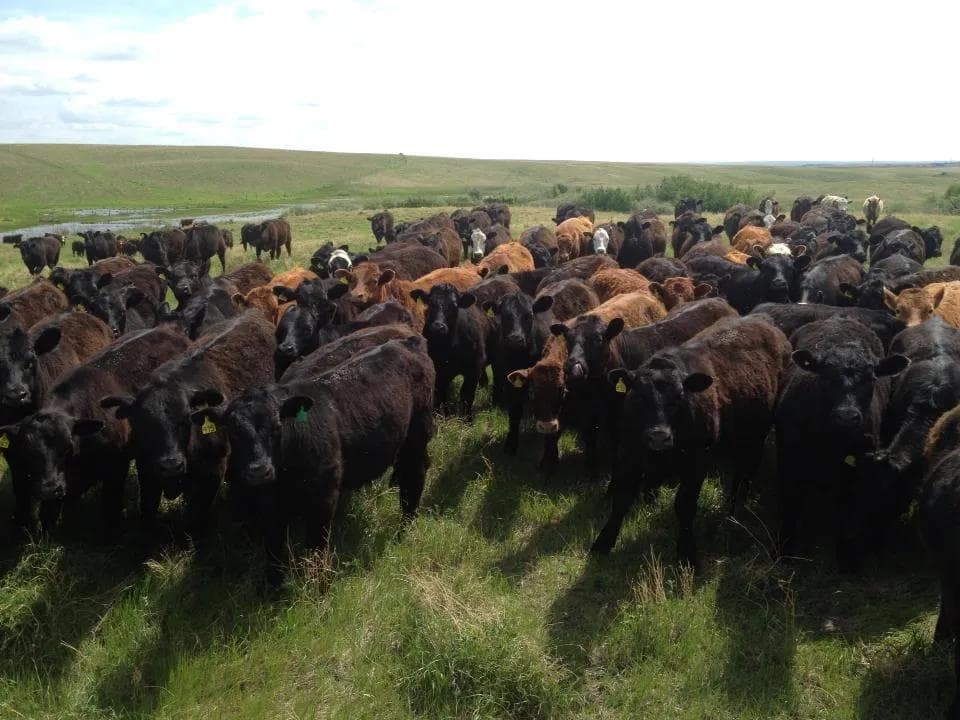
Gould Ranching Ltd., a longstanding agricultural operation in the semiarid region of Consort, Alberta, illustrates how soilcentered regenerative practices can function as a resilience strategy. Located at the northern tip of the Palliser Triangle—an area historically considered marginal for cropping due to frequent drought and limited moisture—the ranch has spent nearly a century adapting to challenging conditions.
The Gould family combines agronomy, livestock expertise, and technological innovation to conserve moisture, minimize soil disturbance, and protect their land from wind erosion and evaporation. Their approach reflects a deep understanding that in their environment, every millimeter of moisture must be captured and protected. Livestock integration plays an essential role in their system. The ranch uses standing corn for winter grazing, which allows cattle to deposit nutrients directly onto the landscape, eliminating the need for manure hauling and turning waste into a natural fertilizer. For more than 20 years, the Gould family has conducted detailed cattle efficiency testing, measuring individual feed intake through monitored feed bunks. This ongoing evaluation allows them to identify high efficiency animals and significantly reduce overall feed requirements across the herd.

Moisture conservation is another foundational pillar of the operation. The adoption of stripper headers more than a decade ago enables the ranch to leave tall standing stubble on fields after harvest. This standing residue traps snow, reduces wind speed at the soil surface, and prevents moisture loss to sublimation. The increased snow capture has allowed the ranch to transition toward continuous cropping, reducing the prevalence of saline seeps and stabilizing soil over time.
Extended grazing rotations mimic natural herd movement, giving pastures long recovery periods that promote deeper root systems, improved soil structure, and increased carbon sequestration. Meanwhile, reseeding cropland into forage and minimizing mechanical disturbance through no till practices helps maintain soil biological integrity and protect the soil surface. Their work demonstrates how regenerative agriculture can create operational stability in one of Canada’s driest farming regions by reducing exposure to moisture deficits, strengthening soil function, lowering input dependency, and improving the reliability of both forage and crop production.
Healthy Soils Are a Form of Risk Management
In an era of more frequent climate shocks, simply shifting sourcing cannot eliminate disruption risk. Long-term resilience requires investing in healthy soils—the natural infrastructure that moderates climate variability. While regenerative agriculture is not a standalone solution, scaling these practices reduces yield volatility, strengthens quality consistency, and enables traceable resilience claims. For companies seeking dependable supply chains, soil health is not only an environmental priority—it is a strategic risk management investment.
Citations:
1. Nouri, A., Yoder, D. C., Lee, J., Yin, X., Tyler, D. D., & Saxton, A. M. (2021). Conservation agriculture increases the soil resilience and cotton yield stability in climate extremes of the southeast US. Communications Earth & Environment, DOI: https://doi.org/10.1038/s43247-021-00223-6
2. Ibid.