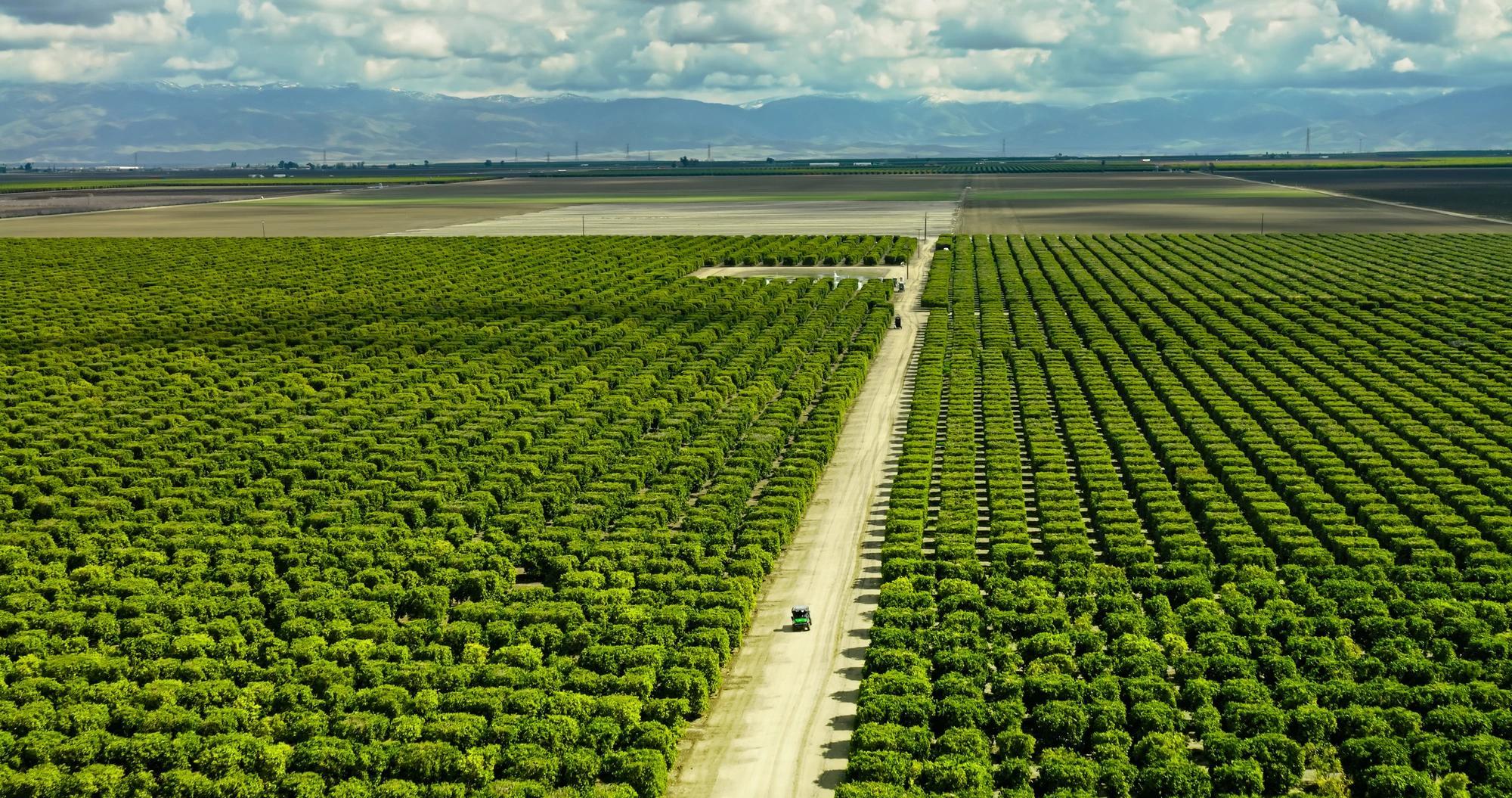
Leaders across the agrifood value chain are increasingly focused on identifying latest emerging opportunities, constraints, and trends in this critical sector, including the role of healthy soil in supporting long-term resilience, supply-chain sustainability, regenerative farmland valuation, and blended finance for transitioning to organic and regenerative practices.
During San Francisco Climate Week, in partnership with BMO Commercial Bank, the BMO Climate Institute convened industry, nonprofit, policy, and academic leaders to explore opportunities to strengthen sustainable agrifood value chains in the U.S.
The discussion focused on the economic and climate conditions producers and buyers are navigating today, and the financial, market, and policy levers that could accelerate a transition to a more sustainable and regenerative model. A key throughline was the need to align risk, capital, and incentives across the value chain to increase sustainable food production.
Pressures on producers
Growers, producers, and ranchers at the farm-level are navigating challenging economic and environmental conditions, including rising input costs, instability of the global marketplace, water scarcity, and consolidation along supply chains.
A newly released survey from the American Farm Bureau Federation underscores the severity of current energy and input‑cost pressures facing U.S. farmers. Farmers surveyed in April reported that combined fuel and fertilizer costs have increased ~20–40%.
Reliable access to water also continues to be a risk for producers in the American West, particularly in California where the Sustainable Groundwater Management Act could eliminate 500,000 acres of irrigated farmland in overdrafted basins by 2040. During our conversation at San Francisco Climate Week, agrivoltaics surfaced as one innovative approach to reduce farm water use and generate solar energy, without putting the farmland footprint at risk.
Despite these pressures, participants pointed to positive signals such as a growing momentum for sustainable agriculture in markets such as Europe and Australia, and sustained domestic demand in dairy and certain crop segments, such as organic blueberries.
Financing levers
There was broad consensus that barriers to scaling sustainable agriculture stem from the upfront investment required during the first several years of the transition to organic and regenerative practices and that producers cannot bear the upfront burden alone.
While transitioning from conventional practices, costs may increase initially due to new specialized equipment, more expensive soil inputs and biological pesticides, and increased labor for weed management. However, producers cannot access price premiums until these practices are fully implemented. To be certified organic, for example, farmland must be free of prohibited inputs for at least three years. In addition, producers can face gaps in crop insurance coverage during conversion because yields may decrease during the early phases of transition, and insurance is based on historical yields.
There remains a strong need for patient capital that can tolerate short-term variability while farms transition. Participants shared examples of leveraging equity, bridge financing, and philanthropic capital to manage through that period. Once producers receive organic (or other sustainability-related) certification, they can access price premiums available through the market (wholesale, retail, and consumer channels).
Participants discussed efforts between commercial lenders and development banks to leverage blended finance and loan guarantee opportunities to support these changes. A philanthropic example included BMO’s grant support to California Certified Organic Farmers Foundation’s Western Region Organic Transition Program, which provides financial resources and technical assistance to low-income farmers over the three-year transition period.
Buyer influence and the role of emissions data
Regulatory and buyer influence remain strong forces in driving the adoption of sustainable practices at the producer level. Brands, manufacturers and large-scale buyers can use their sourcing requirements, RFP design, and contractual language to move the market.
Procurement can be a powerful tool to reward sustainable agriculture practices and producers, but it is not without limitations. Barriers include supply chain traceability and the costs to measure, report, and verify supplier sustainability data. Furthermore, setting new minimum quality and sustainability standards by RFP without pricing increases will simply push the cost upstream to farmers and producers. The importance of farm-level data will grow dramatically for institutional buyers. For example, businesses with over $1 billion in revenue doing business in California are tracking SB 253 requirements, which requires Scope 1 and 2 emissions reporting now and will include Scope 3 emissions reporting beginning in 2027. In-scope businesses will be responsible for reporting farm-level emissions data, making sustainable practices increasingly material. Additionally, the state of California has set the goal to convert conventional to organic systems in annual and perennial croplands to 10% by 2030, 15% by 2038, and 20% by 2045.
Future state
The discussion ended with a look to the future and emphasized why transitioning to more sustainable practices is critical to the sector. Participants pointed to the risks faced by producers in a changing climate and downstream impacts along supply chains.
This sentiment echoed recent findings from the fourth edition of the BMO Climate Institute Business Leaders Survey, which was conducted in January 2026 and included 741 respondents, including 370 in Canada and 371 in the U.S.

Nearly three-quarters (73%) of respondents say they have, or are developing, plans to address climate-related risks, up from 69% in 2025.
Extreme and unpredictable weather is a top concern for business leaders considering the impact of climate-related risks on their companies.
Agrifood businesses seek to build resilient and transparent supply chains in the face of extreme weather and changing climates that will impact production. Continued innovation and collaboration across policy makers, the insurance sector, and financial institutions can unlock progress for the sector.
This conversation during San Francisco Climate Week was in no way exhaustive but provided a valuable opportunity to hear from leaders in the industry working every day to improve our food system.
We will continue to examine climate and finance solutions that can benefit the agricultural sector and support a more sustainable and resilient system—informed by insights from clients, partners, and industry leaders.